

Our Model
Our model integrates four core strategies for concrete change:
Legal and Survival Services to tackle discrimination, abuse and poverty;
Transformative Education to develop community members’ abilities to lead our organization, our movement, and society;
Community Organizing to transform the systems and power structures impacting our communities; and
Policy Innovation to rewrite unjust rules and make our democracy truly accountable to all of us.
Staff and members repeat a common refrain: “Make the Road is my second home.” Regardless of immigration status, race, or gender identity, all find safety, support, and solidarity here. Everyone who comes with an individual story of abuse and exploitation finds that they are not alone – that in collectivizing our experiences and voices, we can build the power to change not just one case, but entire systems.
Our Reach
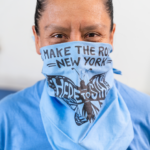
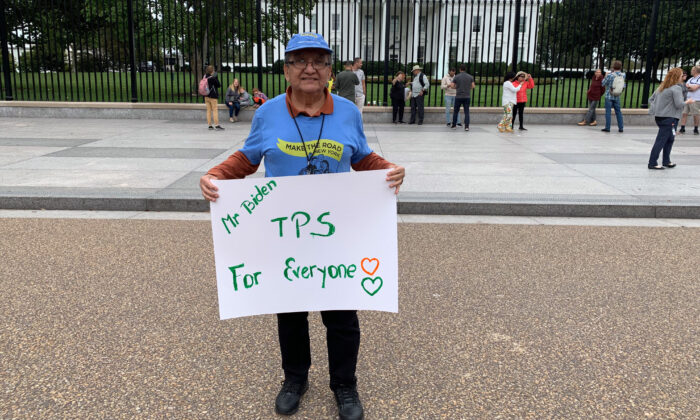
Gabina has taken her passion and leadership to the streets of New York, helping us win the Excluded Workers Fund in 2021 and fighting for expanded healthcare access. She attends rallies and press conferences, and visits elected officials in Washington DC, Albany, and New York City to educate them about our issues.
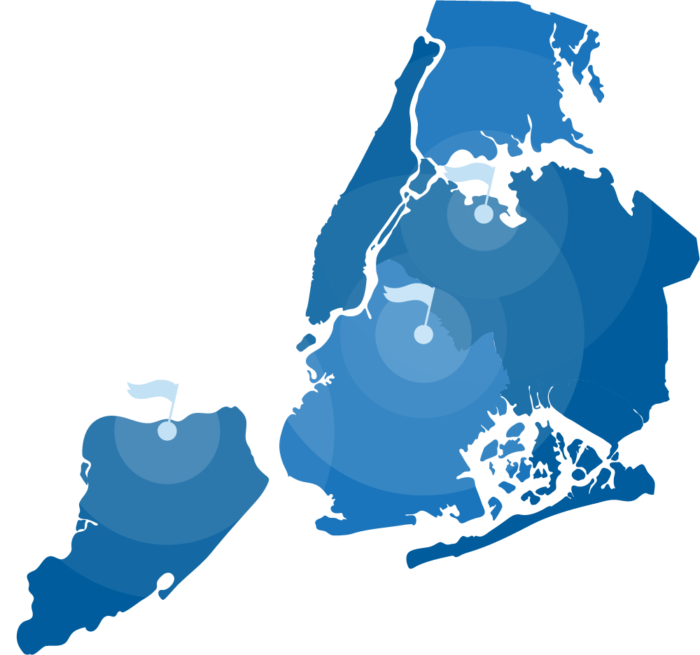
From our NYC centers in Brooklyn, Queens & Staten Island, we serve immigrants from throughout the 5 boroughs and organize to win policies that benefit millions.

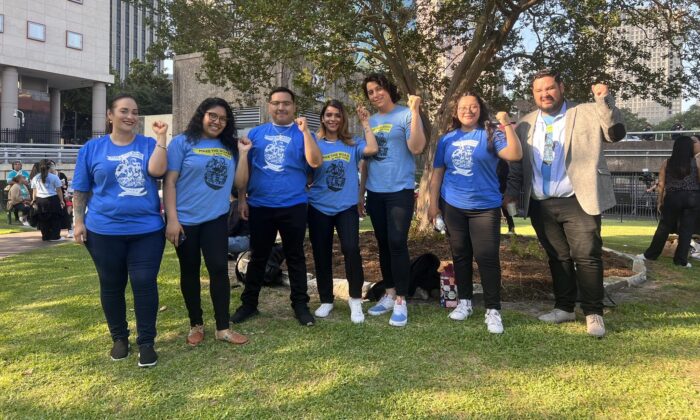
Clara has been advocating for the passage of Coverage for All, a campaign allowing New Yorkers of all immigration statuses access to quality healthcare. Due to her immigration status, Clara does not have consistent access to health insurance. She understands firsthand how hard it is to get access to medicine and medical visits, which is why she is passionate about this campaign. As a leader of our organization, she has shared her story with several press outlets, the governor, and other elected officials to show why our communities need a path to citizenship and Coverage for All.
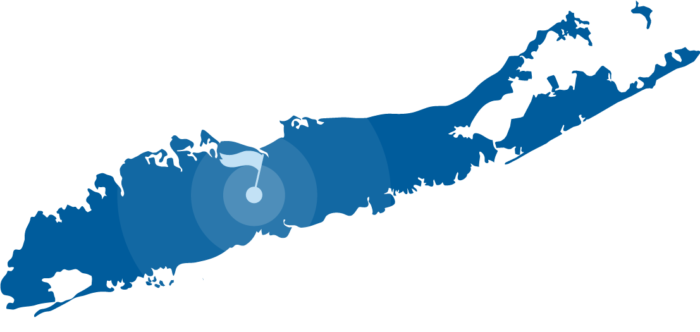
Our fastest growing membership base is leading a highly impactful civic engagement program that is helping to make Long Island more equitable.

Our newest center in Westchester is expanding critical services for the area’s growing and often isolated immigrant community and uniting families across the state to strengthen our ability to win systemic reforms at the state and national levels.


Antonio joined MRNY in 2010, finding a safe space and the encouragement to raise his voice. After working on multiple issues and becoming a recognized leader in MRNY's youth work, he was offered the opportunity to help open Make the Road Nevada. He rose to the challenge and says his experience "made me realized how crucial MRNV was going to be for those families."
We lead the fight for immigrant rights across the country, working as a powerful bloc with our sister organizations: Make the Road New Jersey, Connecticut, Pennsylvania, and Nevada, as well as our national partner, the Center for Popular Democracy, and their affiliate organizations. We support communities of color across the nation to build the resistance with us.

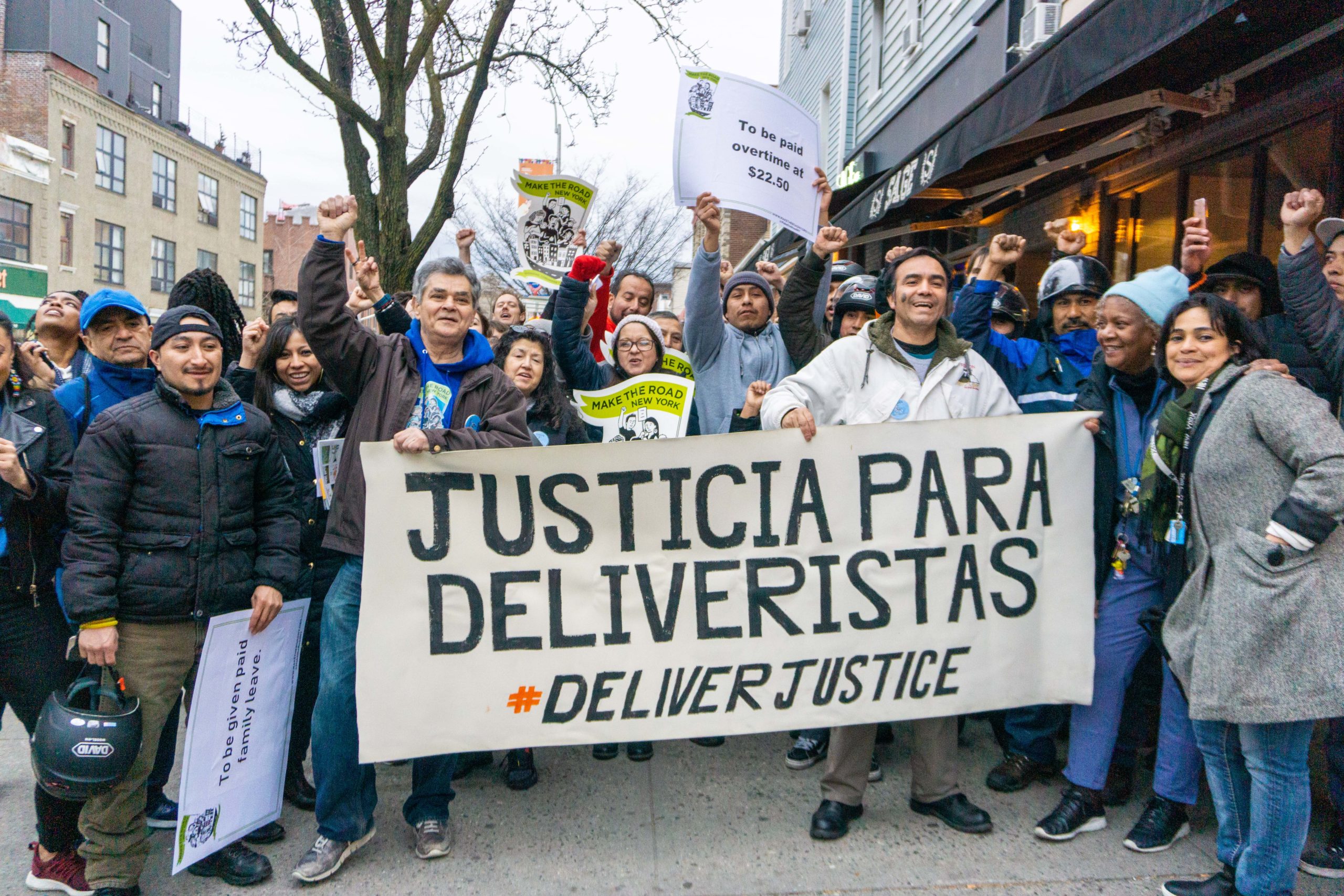
NYC guarantees healthcare for all, regardless of immigration status!
The first victory of 2019! Mayor de Blasio announced his plan to guarantee healthcare for all New Yorkers, regardless of immigration status
The plan announced on Tuesday, January 8th, will serve 600,000 New Yorkers without insurance by strengthening NYC’s public health insurance option, MetroPlus, and guaranteeing that anyone ineligible for insurance – including undocumented New Yorkers – has direct access to healthcare.
We are proud to have been part of various mayoral task forces and commissions that led to this much-needed victory.
The New York Dream Act becomes a reality for immigrant youth!
On January 23rd, 2019, after nearly a decade of organizing efforts, the NY Dream Act finally passed both in the Assembly and Senate!
The NY Dream Act allows undocumented students who meet the criteria to apply for state financial aid. This bill is critical in providing equal opportunity to undocumented youth in our state. Many of our members and organizers have been going to Albany, taking the streets, calling on the Governor and state leaders to make this a reality for years. Thank you to all the bill sponsors! ¡Sí se pudo!
We broke ground on our landmark community center!
On February 7, 2019 Make the Road New York broke ground on our new landmark Make the Road Center in Queens!
We gathered with community members, elected officials, partners, and supporters to celebrate the building of our permanent home— the first place of its kind in New York City.
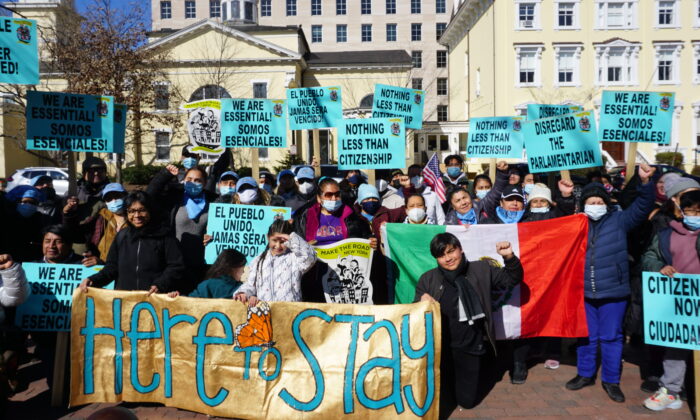
The 24,000 square foot, 3-story building will give us the space and resources to increase our impact. It will be a beacon of hope signifying the dignity and worth of every immigrant, and an unequivocal statement that we are here to stay, stronger than ever.
People power beats world’s richest man! #NoAmazonNYC
On February 14, 2019 Amazon canceled its plans to build a headquarters in our city! This comes after much organizing work by us and others who strongly opposed this terrible deal.
This announcement is a landmark victory for our communities and shows the power of the people, even when taking on the world’s richest man. Our members and allies stood firm against Governor Cuomo’s plan to give away more than $3 billion in taxpayer giveaways so that Amazon could force its empire on our neighborhoods.
Our community’s power prevented a very toxic relationship for our New York City. ¡Sí se pudo!
JPMorgan Chase & Wells Fargo back away from financing private prisons!
On March 5th, 2019 JPMorgan Chase announced it will stop financing private prisons and immigrant detention companies! And on March 13th, Wells Fargo CEO Timothy Sloan told House Financial Services Committee member Rep. Alexandria Ocasio-Cortez that they are exiting their relationships with both GEO Group and Core Civic, the largest private prison corporations in the country.
This follows the incredible work of our members and allies in our Corporate Backers of Hate campaign, which has exposed abuses of private prisons and detention centers and calling on banks to stop financing them.
Westchester signs order to provide language access for immigrants!
On March 5th, 2019 Westchester County Executive, George Latimer signed an Executive Order that requires all County agencies to provide translation and interpretation, ensuring equal access to services for thousands of its residents who are not yet proficient in English.
This makes Westchester County one of the first suburban counties in the U.S. to enact such a progressive language access policy. Starting today, Westchester speaks our language!
The most ambitious city-level climate bill passes City Council!
On April 18th, 2019 The New York City Council passed legislation to become the first city worldwide to set comprehensive and specific limits on climate pollution from large buildings, which are the city’s top source of pollution. This came as a result of a campaign Make the Road New York and many other groups organized.
At a time when our current president denounces climate change as a myth, New York City sends a strong message that climate change is real and we are doing everything we can to protect our city and make our world livable for future generations.
The biggest housing VICTORY in a generation!
After decades of work, our movement won the biggest housing victory in a generation, permanently renewing New York’s rent laws and expanding tenant protections that will benefit millions across the state. The historic bills close several landlord-friendly loopholes and repeal “vacancy decontrol.” This means that regulated apartments will stay regulated — permanently.
This victory shows our potential, but we still have a fight ahead of us. We’ve only just begun. ¡Sí se pudo!
VICTORY! Access to driver’s licences restored for all!
After two decades of organizing, New York state will finally restore driver’s licenses to all, regardless of immigration status! Families will be able to take their children to school, drive to work and carry out our basic needs, without fear that a traffic stop could lead to deportation.
The historic passage of the Green Light NY bill will bring enormous benefits, boosting our state’s economy, creating economic opportunities for immigrants, improving road safety, and keeping families together.
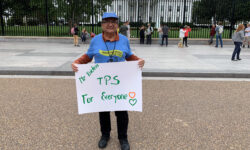
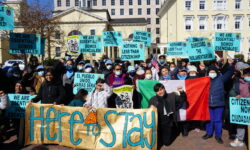
We Marched to Defend DACA and TPS!
Over 200 undocumented youth, community leaders and allies joined us at Battery Park on Oct. 26th, 2019 as we began an 18-day march from New York City to Washington, D.C. to fight for DACA and TPS!
The U.S. Supreme Court heard oral arguments on Nov. 12th on Trump’s unlawful termination of the Deferred Action for Childhood Arrivals (DACA) policy — the futures of 700,000 impacted immigrant youth are at stake. Similarly, over 300,000 Temporary Protected Status (TPS) recipients wait to hear news on the program’s court case. #HomeIsHere!
Greenlight NYC
After a fight of almost 20 years, our community won a great victory – people in the state of New York are now eligible to apply for a driver’s license, regardless of immigration status. The new law, Green Light NY, went into effect on Monday, December 16, 2019.
The New York State Department of Motor Vehicles (DMV) has updated their website to provide information, including the list of acceptable documents.
¡Licencias de conducir para todos están aquí! Todas las personas en el estado de Nueva York son elegibles para solicitar una licencia de conducir, independientemente de su estado migratorio. Haz clic para más información en Español.
Exposing the Corporate Backers of Hate!
On April 30, 2018, We released a report as part of the Corporate Backers of Hate campaign. It exposes financial institutions and private companies that have helped propel Trump’s agenda.
“Bankrolling Oppression: How Wall Street Companies Finance the Private Prison and Immigrant Detention Industry” reveals how JPMorgan Chase, Wells Fargo, and BlackRock have become a critical piece of a $5 billion industry. Led by for-profit prison companies CoreCivic and GEO Group, these Wall Street companies are profiting off of tearing apart families.
Our demand is clear: Stop financing hate!
Demand #FreedomForImmigrants!
What is happening at the border, and across the US, is an abomination. Hundreds of children are being detained in NY, without their parents, with dozens flown here from Texas.
On June 21st, 2018 we jumped into action at LaGuardia airport, to welcome them and let them know they are not alone. Trump’s executive order to detain families together is not a solution. It is an attempt to impose an indefinite jail sentence on entire families.
NYS Pension Funds divest from private prisons and immigrant detention centers!
On July 13th, 2018, New York State Comptroller Thomas DiNapoli announced that the New York State pension funds will divest from private prison and immigrant detention companies! This is a huge victory for our movement!
It sends a strong message: New York won’t be complicit in the mass criminalization of people of color and the tearing apart of immigrant families. We applaud Comptroller DiNapoli for making New York the first state to divest from private prisons, a bold action to stand with our community. And we thank Enlace for working with us on this important effort.
Report calls for transparency and a complete overhaul of the economic development system!
On August 2, 2018, we released a report with the Fiscal Policy Institute showing how Governor Cuomo’s signature economic development program shortchanges communities of color — read about it in The New York Times.
In the report, “Shortchanged: Racial Disparities in New York’s Economic Development Programs,” we call for transparency and a complete overhaul of the economic development system in order to invest in strategies proven to support all New Yorkers, including people of color.
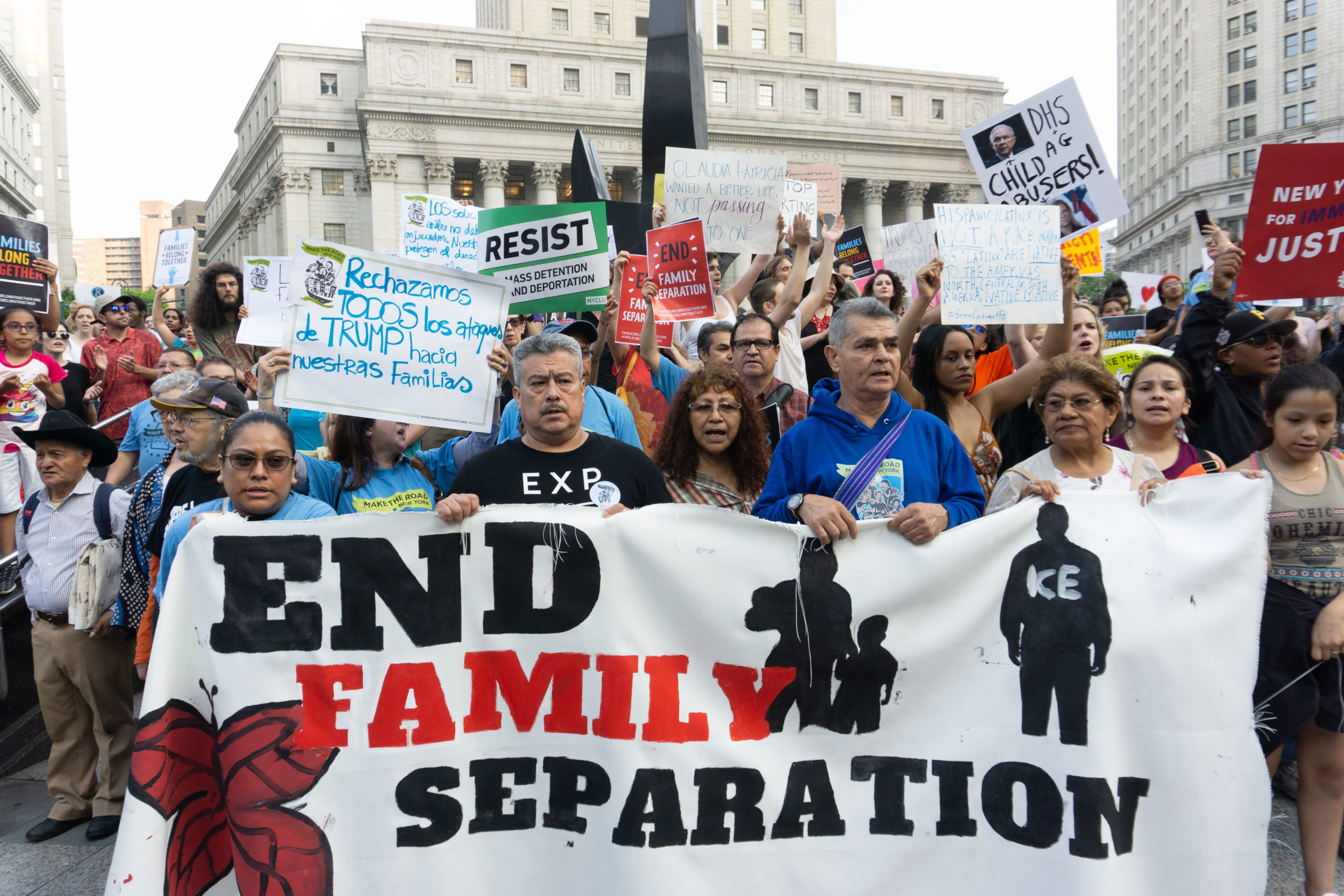
We’re fighting back DHS’s proposed analysis of Public Charge!
A couple of months ago, the Trump administration quietly announced this proposal, which will have an enormous impact on our communities. It will force many immigrant families to choose between accessing the food assistance, housing assistance, and public health insurance that they need, and preserving their ability to obtain legal status in this country. Learn more on our Know Your Rights page.
We are working hard to make sure that community members have accurate information and don’t disenroll from benefits in a panic at this time, as this is still only a proposal.
Our 2018 Annual Gala was truly spectacular!
We gathered together with such an inspiring crowd of people — all who support Make the Road New York in so many ways — to celebrate our victories, and renew our energy and power for the fight ahead.
Our members, communities, and organization are in the midst of a very intense time. Make the Road New York will continue to respond and push on the path forward. We will remain at the forefront of the fight against hate and oppression. As Ady said, “as we spend our lives building this road, it will be more bold and beautiful and joyous if we make it together.” Check out some of the best moments from our gala.
Fighting for a clean #DreamActNow!
Trump’s decision to end the Deferred Action for Childhood Arrivals (DACA) program has caused a humanitarian crisis: endangering the lives of 800,000 immigrant youth and their families. Every day, more than 100 individuals lose DACA status. Trump has also left hundreds of thousands of Temporary Protected Status (TPS) holders in limbo.
We’re fighting back with everything we have and demanding that Congress take action in support of a clean Dream Act and protections for TPS holders.
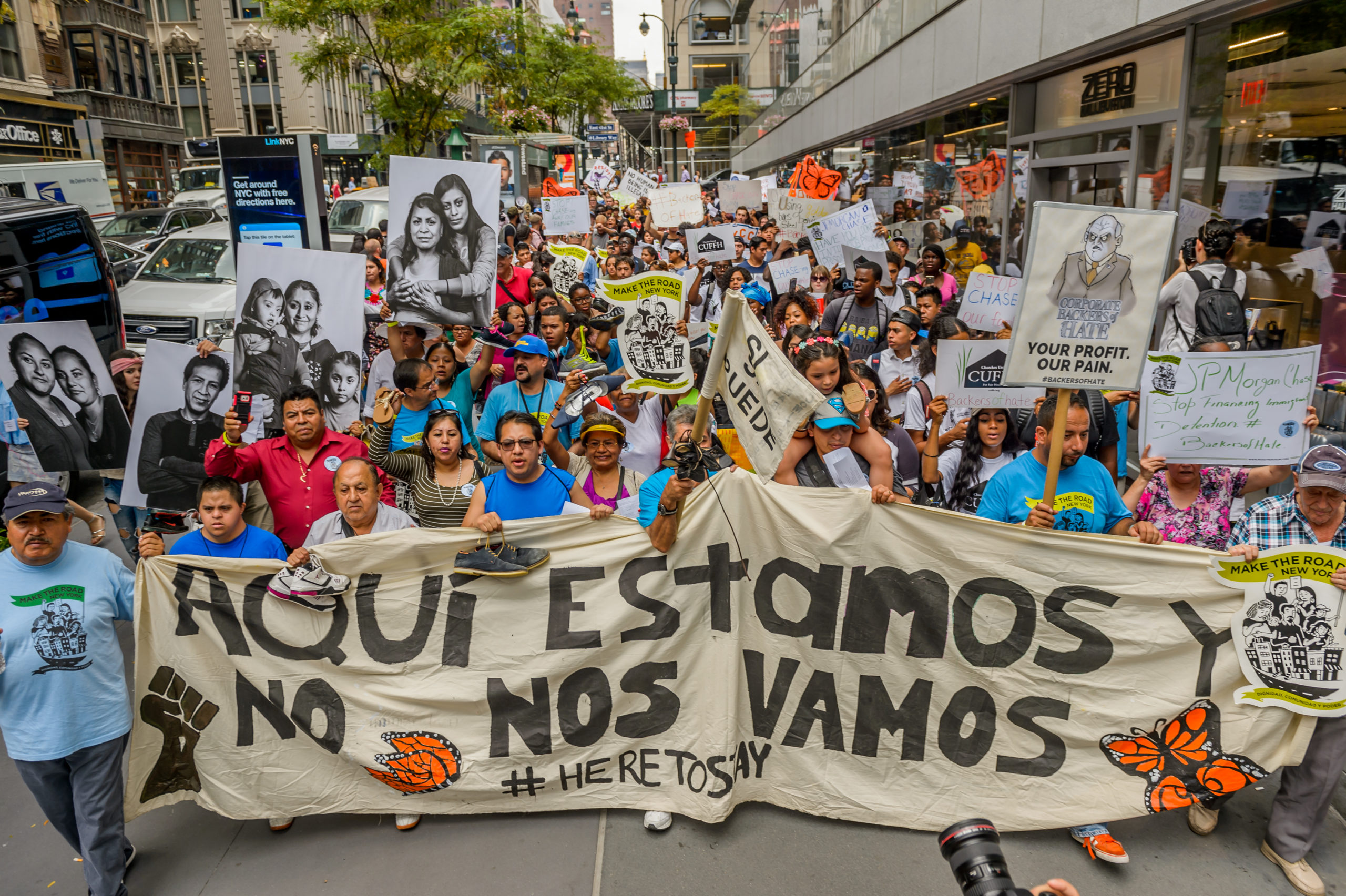
Standing up to the Corporate Backers of Hate!
On June 8, 2017, NYC Comptroller Scott Stringer announced that the NYC Employee Retirement Systems pension funds will divest from private prison and immigrant detention companies. We have been calling attention to corporations that are profiting off of the incarceration of immigrants and people of color, and demanding financiers like JPMorgan Chase divest from CoreCivic and GEO Group.
This announcement sends a strong message: New York won’t support corporations that are needlessly locking up members of our communities.
Protections against biased policing and harsh discipline
We successfully advocated for the 2011 Student Safety Act and the 2013 Community Safety Act to draw attention to inequities in school discipline and end discriminatory police profiling, as well as the 2016 ban on suspensions of students in kindergarten through 2nd grade.
In 2017, youth, including MRNY members, released a policy brief asking for investments to create safe and supportive educational environments. They presented it to a receptive city council and that same day the DOE announced an $8 Million investment in social, emotional, and mental health support for NYC students including $3 million for restorative practices – a major victory for our students.
Country’s strongest state executive order protecting immigrants’ information
On September 15, 2017, after over a decade of organizing by MRNY and allies, Governor Cuomo signed one of the country’s strongest executive orders prohibiting state agencies from gathering and sharing immigration status information with federal immigration authorities.
This means that in the vast majority of situations, immigrants across New York State can interact with police and other state agencies with a legal guarantee that they will not be asked their immigration status. Law enforcement agencies will be barred from sharing any personal information with ICE for immigration enforcement.
City says NO to cooperating with Trump’s deportation agenda
New York City has passed more laws to protect immigrants than any other city. In October 2017, the NYC Council passed a bill prohibiting city agencies from misusing resources to assist with federal immigration enforcement — an extraordinary victory for our immigrant community!
Among other policies we have fought for and won are the creation of the New York Immigrant Family Unity Project (NYIFUP), legislation limiting when the NYPD and Department of Correction will honor a US Immigration and Customs Enforcement (ICE) detainer, and Department of Education protocols directing public schools to block ICE agents from entering schools without valid warrants.
Protecting NYC tenants
On December 20, 2017, After a ten-year fight, the Asthma-Free Housing Act – which requires landlords to inspect for and address asthma triggers annually to keep kids safely in their homes – became law. The NYC Council also passed the Certificate of No Harassment legislation to prevent landlords with a history of tenant harassment from obtaining permits to demolish or renovate their buildings.
These wins came thanks to the fierce determination and leadership of Make the Road New York members.